


What Is a Port of Entry? A Plain-English Guide for First-Time Texas Importers
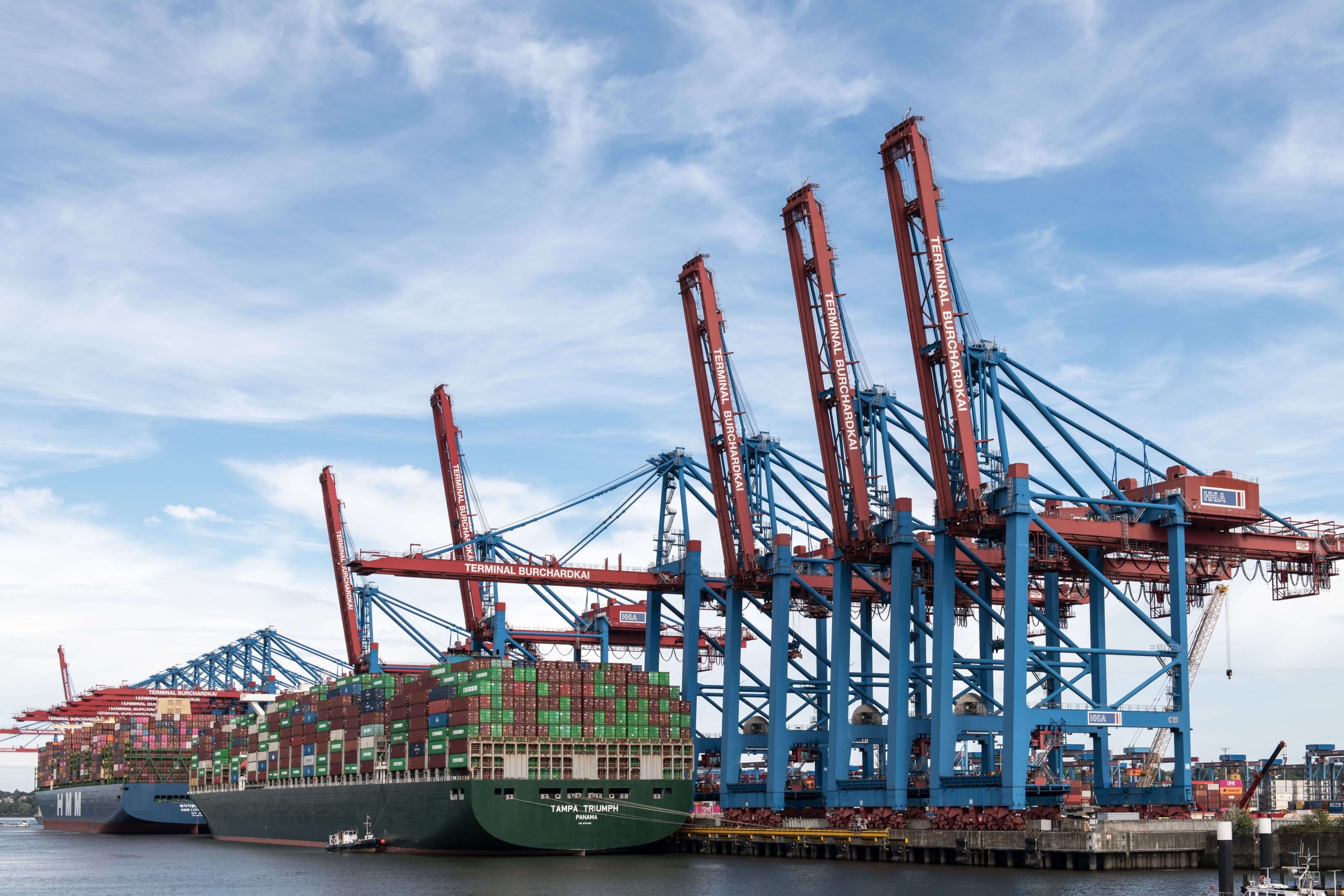
A lot of first-time importers picture the U.S. border as a line on a map — something your truck crosses, and then you’re in. That’s not quite how it works. What is port of entry? is an officially designated location, authorized by federal law, where U.S. Customs and Border Protection officers physically inspect cargo, verify documentation, and decide whether a shipment is cleared to move deeper into the country. Every commercial import passes through one. No exceptions.
The U.S. Department of Homeland Security maintains over 300 of these designated locations across the country — land crossings, international airports, and seaports — each staffed with CBP officers conducting customs, immigration, and agriculture inspections. If you’re importing through Texas, especially from Mexico, there’s a good chance your shipment is moving through Laredo, the single busiest commercial port of entry in the entire United States. This guide walks through what actually happens there, why it matters, and how to avoid getting tripped up on your first import.
What Is a Port of Entry — And How Is It Different From a Border Crossing?
People use these two terms interchangeably all the time. They mean different things.
A border crossing is physical infrastructure — a bridge, a road, a stretch of highway that happens to cross an international boundary. The port of entry is a legal designation, assigned by the federal government, that authorizes a specific location to process travelers and commercial cargo. Not every bridge over the Rio Grande is a commercial port. Not every road that touches Mexico gives your truck legal permission to proceed into the U.S. supply chain.
The practical difference matters a lot for importers. A commercial port of entry has a CBP Port Director, operates under specific hours and commodity rules, and is equipped to process the entry documentation your shipment legally requires before it can be released. Smaller crossings — sometimes called “stations” — fall under the administrative umbrella of a larger port and may not handle all cargo types at all hours.
| Border Crossing | Port of Entry |
|---|---|
| Physical infrastructure (road, bridge, rail) | Legally designated inspection location |
| Geographic point between two countries | Federally authorized CBP operation |
| Not all support commercial cargo | Equipped for customs clearance procedures |
| No entry documentation processed | Duties assessed, documentation verified |
The Federal Register’s official port of entry database maintains this distinction clearly. Worth knowing: even holding a valid visa doesn’t guarantee U.S. entry — the CBP officer at the port makes the final admissibility determination. That’s true for travelers and, in different ways, for commercial shipments too.
What Actually Happens When Your Shipment Reaches a U.S. Port of Entry

This is the part most first-time importers are genuinely fuzzy on, and that fuzziness costs them time and money.
When your cargo arrives at a commercial port, the process moves roughly in this sequence: your customs broker (or you, if you’re filing yourself) submits an electronic entry to CBP before the shipment arrives — sometimes days in advance for ocean freight. CBP reviews that entry against the documentation on file. From there, the system either “lines” the shipment for release or flags it for a secondary examination. If CBP selects your cargo for a physical inspection, officers will verify the contents against what was declared. Once any duties are assessed and paid, CBP issues a release and your freight moves to its final destination.
A few things worth understanding about that inspection step: it doesn’t mean something is wrong. CBP conducts random examinations as part of routine border security operations. What it does mean is that any discrepancy between your paperwork and your actual cargo — wrong HTS classification, missing commercial invoice details, mismatched weights — will surface right there and create a hold.
The full customs clearance process involves more moving parts than most new importers expect, which is exactly why experienced Texas customs brokerage services for small and mid-sized importers exist — not as a luxury, but as a practical safeguard against delays that snowball fast.
The Role of CBP: Who Is Checking Your Cargo and Why
CBP — U.S. Customs and Border Protection — is the federal agency with authority over every port of entry in the country, and handles US port of entry locations. Their mandate is broad: screen imports for trade compliance, collect duties, enforce agriculture restrictions, flag security risks, and verify admissibility. At a land border crossing like Laredo, that means CBP officers are checking commercial invoices, bills of lading, and entry documentation while agriculture specialists separately inspect for prohibited plant material or pests.
What catches new importers off guard is the scope of CBP’s authority during a primary inspection. Officers can examine electronic devices. They can question drivers. They can detain cargo pending further documentation. And they can do all of this without advance notice or specific cause — it’s part of the broad authority that comes with operating a port of entry.
Quick tip: A CBP examination is a normal part of the entry process, not an indication your shipment is in trouble. Preparation is the only variable you actually control.
The CBP Licensed Customs Broker Listing is the right place to verify that whoever is filing entries on your behalf holds a valid federal license — something worth checking before you hand over power of attorney.
Laredo, TX: What Makes It the Busiest Commercial Port of Entry in the U.S.

Laredo isn’t just a border city. It handles more import and export trade value than any other land port in the country, driven almost entirely by the U.S.-Mexico manufacturing corridor and the volume of commercial truck traffic moving through daily.
The geography matters. Laredo sits directly across from Nuevo Laredo, Tamaulipas — a major manufacturing and logistics hub in northern Mexico. Goods produced under nearshoring arrangements, automotive supply chains, electronics assembly, and agricultural exports all funnel through this corridor with remarkable frequency. For importers sourcing from Mexico, proximity to Laredo isn’t incidental. It’s often the deciding factor in how fast product moves from a factory floor to a U.S. warehouse.
Laredo Port of Entry — At a Glance:
- Consistently ranks as the #1 U.S. land port by trade value
- Processes hundreds of thousands of commercial truck entries annually
- Managed under CBP’s Laredo Field Office
- Connected directly to Mexican federal highway infrastructure
- Served by multiple licensed customs brokers specializing in U.S.-Mexico trade
Working with a customs broker in Laredo who understands the specific commodity flows and CBP protocols at this port is a different experience than working with a generalist. Local knowledge — which lanes move faster, which commodity types draw additional scrutiny, what documentation CBP Laredo typically requests upfront — translates directly into fewer holds and faster releases.
What You Need to Have Ready Before Your Shipment Arrives

The most avoidable delays at any port of entry come down to one thing: incomplete or inaccurate paperwork. CBP can’t release what it can’t verify, and verification starts with your documentation package.
At minimum, every commercial import entry requires:
- Commercial invoice — must include seller and buyer details, country of origin, accurate description of goods, and declared value
- Packing list — itemized breakdown of contents, quantities, and weights
- Bill of lading or airway bill — your proof of transport contract
- Correct HTS classification — this determines your duty rate; misclassification is one of the most common and expensive mistakes
- Customs bond — required for formal entries over $2,500 in value
- Importer of Record information — your EIN or CBP-assigned importer number
Missing any of these doesn’t just slow your shipment. It can trigger an exam, generate a CBP demand for additional documentation, and accumulate storage fees at the port warehouse while everything gets sorted out. The CBP preclearance and admissibility guidance lays out documentation expectations in detail for different entry types, which is worth reading before your first shipment moves.
Common First-Time Mistakes at U.S. Ports of Entry
Most delays at Laredo or any other commercial port of entry vs border crossing aren’t mysterious. They’re predictable, and they’re preventable.
- Waiting until the shipment arrives to start customs paperwork. Entry filing happens before arrival for most commercial cargo. Starting late means your broker is scrambling — and CBP may flag the entry for that reason alone.
- Incorrect HTS classification. The Harmonized Tariff Schedule has thousands of classifications. Picking the closest-sounding one without verifying it is a compliance risk that can trigger audits and back-duty assessments.
- Assuming all shipments clear the same day. Clearance times at Laredo vary with CBP staffing, inspection volume, and how complete your entry documentation is. Build realistic timelines into your logistics plan.
- Not communicating with your carrier. Freight that arrives at the port without corresponding entry documentation filed is an automatic hold. Your broker, carrier, and freight forwarder need to be in sync well before the truck hits the border.
- Choosing a broker based on price alone. A licensed customs broker who knows U.S.-Mexico trade compliance and has established relationships at the Laredo port is worth far more than a discount service that treats your entry as a form-filling exercise.
The Part Most People Skip Until It’s Too Late
Understanding what a port of entry is only gets you so far. Knowing the Laredo port handles enormous import volume is useful context. But what actually determines whether your first shipment clears smoothly or sits in a warehouse accumulating fees is the quality of the work done on your behalf before the truck rolls up to that primary inspection booth.
TQ Customs Brokerage operates out of Laredo and Del Rio — two of the most active commercial entry points on the Texas-Mexico border — and handles the specific compliance, classification, and CBP coordination that makes the difference between a clean release and a costly delay. Client reviews on platforms like Yelp consistently point to their depth of knowledge on complex U.S. customs regulations as the reason importers keep coming back.
Getting your first import right isn’t complicated once you understand the process. Download the Free First Import Checklist — it covers every step from country of origin to U.S. delivery, so nothing catches you off guard at the port.
Frequently Asked Questions
What is the difference between a port of entry and a border crossing?
A border crossing is the physical infrastructure — a bridge or road — where two countries meet. A port of entry is a federal legal designation authorizing CBP to conduct customs, immigration, and agriculture inspections at that location. Not every border crossing is a designated port of entry, and not every port handles all types of commercial cargo.
Do I need a customs broker to import through a U.S. port of entry?
CBP does allow importers to file their own entries in some situations — this is called self-filing. In practice, most businesses importing commercially use a licensed customs broker to reduce the risk of misclassification errors, documentation gaps, and compliance failures that generate delays or post-entry penalties.
How long does it take to clear a shipment through the Laredo port of entry?
It depends on documentation accuracy, shipment type, whether CBP selects your cargo for examination, and daily port workload. A well-prepared entry with complete documentation can clear quickly. An entry with missing paperwork or a classification flag can sit for days. Preparation — not speed — is what you can actually control.